The Moment That Changed Malaysian Sports Television Forever
When Malaysians tuned in to watch the 1998 FIFA World Cup, satellite dishes were still a status symbol. Astro had only just launched two years earlier, and the idea of watching live football on a premium pay-TV platform felt like the future. For the next two decades, Astro was that future — the undisputed home of the World Cup in Malaysia, broadcasting every tournament from France 1998 through to Qatar 2022.
That era is now officially over.
On 6 May 2026, Communications Minister Datuk Fahmi Fadzil confirmed that Radio Televisyen Malaysia (RTM) and Unifi TV have been awarded the official broadcasting rights for the 2026 FIFA World Cup in Malaysia. In a statement that was equal parts diplomatic and revealing, Astro admitted its bid was “fair and competitive” — but still unsuccessful.
Twenty years of World Cup history, ended in a single announcement.
What Actually Happened: Breaking Down the Rights Shift
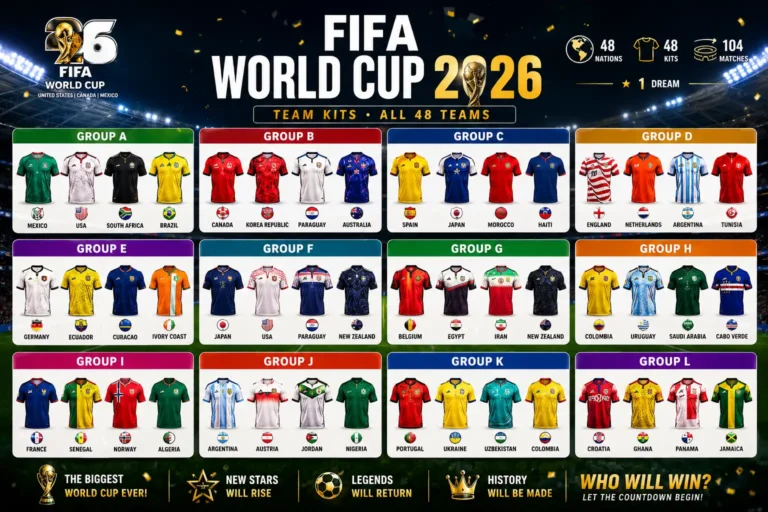
The 2026 FIFA World Cup — co-hosted by the United States, Canada, and Mexico from June 11 to July 19 — is the largest in tournament history, featuring 48 teams and 104 matches for the first time.
The Malaysian government approved RM24 million to secure the rights. Under the new arrangement:
- Unifi TV (operated by Telekom Malaysia subsidiary Unifi) will broadcast all 104 matches live
- RTM will air the majority of matches, either live or on a delayed basis
- Matches will also be available on free-to-air via MyTV and on OTT platforms through RTM Klik
Astro, for its part, has not exited the conversation entirely. The company confirmed it is in active discussions with the new rights holders to carry select World Cup matches across its own platforms — Astro, NJOI (its free-to-air service), and Sooka, its OTT streaming app — which would extend coverage to millions more Malaysians on mobile devices and commercial premises.
In Astro’s Own Words: A Candid Admission
Astro’s official statement was unusually candid for a corporate communication. The company cited three interlocking reasons for not pushing its bid higher:
1. Escalating rights costs driven by global inflation International sports broadcasting rights have surged across the board in recent years. What FIFA charged a decade ago bears little resemblance to what it commands today. Astro acknowledged that “rising costs, driven by inflation and escalating international sports broadcasting rights, have significantly increased the financial investment required.”
2. Rampant piracy — specifically the 2018 and 2022 World Cups This is perhaps the most striking admission. Astro explicitly stated that both the 2018 Russia and 2022 Qatar World Cups were “extensively pirated events in Malaysia.” When you pay premium prices for exclusive rights and a significant portion of your potential audience watches for free through illegal IPTV streams and Telegram bots, the commercial logic of paying even more next time collapses.
3. Unfavourable match timings and limited advertising runway The 2026 World Cup kicks off in North America — meaning matches will largely air in the middle of the night or early morning in Malaysia (GMT+8). Selling advertising campaigns around 3am broadcasts is a fundamentally different proposition than primetime football. Astro noted that “limited runway to plan meaningful campaigns with clients had further diminished the commercial value.”
Taken together, these aren’t excuses. They are a diagnosis of a broken model — and Astro was honest enough to say so out loud.
Astro’s 20-Year World Cup Legacy: A Brief History
To appreciate the weight of this moment, it helps to understand just how central the World Cup was to Astro’s identity.
Astro launched in October 1996, positioning premium live sports as its core value proposition over free-to-air RTM. Securing FIFA World Cup rights became a cornerstone of that strategy — and a powerful tool for subscriber acquisition every four years.
- 1998 (France): Astro’s first World Cup. A watershed moment that established satellite TV as the home of premium football in Malaysia.
- 2002 (Korea/Japan): The first Asian-hosted World Cup. Astro’s coverage reached millions of subscribers during what was a football-mad period in the region.
- 2006 (Germany): HD television was still emerging. Astro began laying the groundwork for high-definition sports coverage.
- 2010 (South Africa): The vuvuzela World Cup. Astro aired Zakumi’s tournament to a subscriber base that had grown well past 3 million households.
- 2014 (Brazil): Astro B.yond’s HD platform was now in full swing. The Brazilian World Cup was arguably Astro’s most commercially successful tournament.
- 2018 (Russia): First signs of trouble. Piracy of World Cup streams via Telegram and illegal IPTV boxes was rampant. Astro still retained the rights.
- 2022 (Qatar): The pandemic had accelerated cord-cutting. Streaming habits had changed irreversibly. Piracy was worse than ever. Astro’s subscriber numbers had been falling since their 2016 peak.
- 2026 (USA/Canada/Mexico): Rights lost. The baton is passed.
This is a company that watched 71% household penetration in 2016 — the envy of pay-TV operators across Southeast Asia — erode year after year as Netflix, Disney+, YouTube, and cheap illegal streams pulled viewers away.
The Piracy Problem: Malaysia’s Biggest Open Secret
The piracy issue deserves its own examination because it sits at the heart of why premium sports broadcasting is becoming commercially untenable in Malaysia.
During the 2022 Qatar World Cup, illegal streaming links proliferated on Telegram channels, IPTV subscription boxes sold openly in Low Yat Plaza and Lowyat.net forums, and Facebook Groups dedicated to sharing live streams attracted hundreds of thousands of members. Anti-piracy enforcement existed but struggled to keep pace with the velocity of infringement.
Astro’s statement put a name to what everyone already knew: those tournaments were “extensively pirated.” When you spend tens of millions on broadcast rights and your core audience watches for free — sometimes via services that offer better picture quality than your own buffering stream — you are funding content for pirates to redistribute.
The Malaysian government has signalled this time will be different. Communications Minister Fahmi explicitly referenced anti-piracy enforcement as a priority for the 2026 tournament, and Astro itself (through its Sooka platform) has previously worked to remove tens of thousands of infringing links from global video-sharing sites and Telegram.
Whether enforcement will be meaningfully stronger in 2026 remains the critical open question.
The Bigger Picture: Terrestrial TV’s Slow Collapse
Astro’s situation is not uniquely Malaysian. It is the local chapter of a global story.
The model that powered pay-TV for three decades — aggregate content, charge a monthly fee, sell advertising against appointment viewing — is structurally compromised. The reasons are well documented:
The streaming revolution didn’t just add new options. It fundamentally changed behaviour. When Netflix entered Malaysia in 2016, it didn’t just give subscribers something to watch. It trained a generation to expect content on-demand, without schedules, without ads on basic tiers, and at prices that seemed far more reasonable than a full Astro subscription.
Kids stopped watching linear television. This is perhaps the most damning long-term signal. Previous generations structured their weeks around Saturday morning cartoons and prime-time dramas. Today’s children are YouTube-native. They follow creators, not channels. They watch Minecraft tutorials, K-pop reaction videos, and animated shorts on demand. The concept of waiting for a show to air at a fixed time is as foreign to a 10-year-old in 2026 as rewinding a VHS tape.
Gen Z watches on their terms. The generation now entering prime earning years — the demographic advertisers most want to reach — overwhelmingly prefers streaming. YouTube Premium offers ad-free viewing and downloads. Spotify covers music. Twitch delivers live gaming content in real time. Netflix and Disney+ handle prestige drama and film. For many young Malaysians, paying RM100+ per month for an Astro subscription when they’re already spending on three or four streaming services simply doesn’t compute.
Pay-TV subscription numbers tell the story. Malaysian pay-TV subscriptions fell from 6.88 million in 2021 to approximately 6.5 million in 2022 — a 3% decline. The trend has continued. Astro’s average revenue per user (ARPU) slipped to RM96.3, down from the previous quarter and the previous year. The company has had to introduce cheaper “Astro One” bundled packages to retain subscribers, which helps with numbers but compresses margins.
The Streaming Cost Squeeze: The Other Side of the Coin
There is, however, an important nuance the cord-cutting narrative glosses over: streaming is getting expensive too.
Netflix Malaysia, Disney+, Viu, Apple TV+, iQIYI, and now the impending FIFA+ relaunch — the cumulative cost of subscribing to multiple streaming services is starting to rival or exceed what a single Astro subscription cost. This is a global phenomenon dubbed “subscription fatigue.”
The irony is sharp: consumers cut cable to save money, but the fragmentation of content across competing streaming platforms means you now need five subscriptions to access what one bundle used to cover.
For price-conscious Malaysian consumers, this is creating a new calculation: stick with one or two services (typically Spotify and YouTube Premium for audio-visual basics, maybe Netflix for prestige content), and fill in the gaps with free-to-air RTM or piracy. The middle ground — premium pay-TV bundling dozens of channels — is being squeezed from both ends.
FIFA’s Own Streaming Ambitions: The Game Is Changing Globally
The Astro story is also inseparable from a seismic shift at the top of world football governance.
FIFA is no longer content to simply sell broadcast rights to national operators and collect fees. In October 2025, FIFA and DAZN announced a full partnership to relaunch FIFA+ — rebranded as the “Global Home of Football” — with a 2026 launch timed to coincide with the World Cup. The platform will combine live and on-demand top-tier football content, highlights, and behind-the-scenes access from over 100 men’s and women’s national teams and club leagues.
The new FIFA+ will be free to access in most markets (with optional premium tiers), powered by DAZN’s global distribution infrastructure. FIFA Secretary General Mattias Grafström called it “a game-changing step forward.”
Simultaneously, FIFA struck a deal with YouTube in March 2026 allowing broadcasters to stream the opening 10 minutes of World Cup matches on YouTube — a deliberate play to capture mobile-first audiences in markets where digital viewing has overtaken cable. FIFA also partnered with TikTok as a preferred platform for World Cup video content.
The message from FIFA is clear: they are no longer dependent on any single national broadcaster. They are building a direct relationship with the global audience, platform by platform. National operators like Astro are increasingly just one node in a much wider distribution network — and a less critical node than they used to be.
What Does This Mean for Malaysian Football Fans in 2026?
The practical picture for Malaysians watching the 2026 World Cup is arguably better than it has been in years:
- Free-to-air access: RTM will air the majority of matches, meaning Malaysians can watch without paying anything beyond a basic TV aerial or MyTV decoder.
- Full coverage: Unifi TV will broadcast all 104 matches live — something that requires a Unifi broadband or TV subscription.
- Potential Astro access: If Astro’s discussions with RTM and Unifi TV succeed, matches could also appear on Astro and Sooka, dramatically expanding reach.
- Digital access: RTM Klik and Unifi TV’s OTT apps will carry content for viewers who prefer mobile or laptop viewing.
The 2026 World Cup may reach more Malaysian eyeballs than any previous edition — just through a completely different architecture than the one Astro built over 20 years.
What Happens to Astro Now?
Losing the World Cup does not mean Astro is finished. The company still holds rights to the Premier League, UEFA Champions League, Formula 1, MotoGP, La Liga, Bundesliga, Wimbledon, and a portfolio of Malaysian sports including the Malaysian Football League and Sepak Takraw.
Crucially, Astro has been investing in Sooka — its OTT platform — which has grown to become what the company claims is Malaysia’s number one sports app. Sooka’s engagement rose by a third year-on-year even without major tournaments, suggesting the platform has genuine stickiness beyond one-off events.
Astro is also pushing into Astro Fibre (broadband), enterprise services, and local content production as it attempts to diversify revenue away from traditional pay-TV subscriptions. In August 2025, it recorded its first positive month of Pay-TV subscriber additions since 2018 — a small but meaningful milestone.
The company is not in freefall. But it is in transformation. And the loss of a 20-year World Cup relationship is the starkest possible signal of how much the ground has shifted beneath it.
The Broader Lesson: Rights Are Only Worth What People Will Pay For
Astro’s World Cup exit is a case study in what happens when three forces converge simultaneously:
- Content costs spiral upward (sports rights inflation is relentless globally)
- Piracy erodes the value of those rights (you pay for exclusivity that isn’t really exclusive)
- Consumer behaviour shifts (your target audience moves to platforms that don’t need you)
Any one of these pressures is manageable. All three together, sustained over years, makes a business model that was built for a different era increasingly difficult to justify.
The World Cup is not just a football tournament. For Astro, it was an anchor — a once-every-four-years reason for households to maintain or upgrade their subscriptions. Without it, the calculus for that subscriber segment changes.
For Malaysia’s media landscape more broadly, the shift signals that the era of a single pay-TV operator dominating premium content is ending. What replaces it is a more fragmented, more accessible, more contested ecosystem — where free-to-air RTM, OTT streaming apps, and global platforms like FIFA+, YouTube, and DAZN all compete for the same eyeballs, often with the same content.
For football fans, that’s probably good news. The World Cup will be easier to watch than ever before.
For the traditional broadcast industry, the World Cup’s departure from Astro is not just a business story. It is a symbol of an entire era drawing to a close.
Key Takeaways
- Astro loses the FIFA World Cup after 20 consecutive years of broadcasting the tournament in Malaysia (1998–2022).
- RTM and Unifi TV are the official broadcasters for the 2026 FIFA World Cup in Malaysia, with the government allocating RM24 million for the rights.
- Astro cited rising content costs, rampant piracy, and unfavourable match timings as reasons for not escalating its bid.
- The 2018 and 2022 World Cups were “extensively pirated” in Malaysia, significantly reducing the commercial value of exclusive rights.
- Unifi TV will air all 104 matches live; RTM will carry most matches free-to-air.
- FIFA and DAZN are relaunching FIFA+ in 2026 as the “Global Home of Football,” signalling FIFA’s shift toward direct streaming relationships with global audiences.
- Astro is not exiting sports broadcasting — it retains rights to the Premier League, UCL, F1, MotoGP, and more, and is developing Sooka as its OTT play.
- The broader story is the collapse of the traditional pay-TV model globally, driven by streaming, cord-cutting, subscription fatigue, and digital-native audiences.
This article reflects publicly available information as of May 2026. Broadcasting arrangements may evolve as Astro’s ongoing discussions with RTM and Unifi TV progress.