The 2026 FIFA World Cup will not simply be remembered for expanded competition and new host cities. It will also become one of the most commercially important jersey eras football has ever seen.
National team shirts are no longer just match uniforms. They represent culture, identity, street fashion, football philosophy, and emotional connection between fans and their countries.
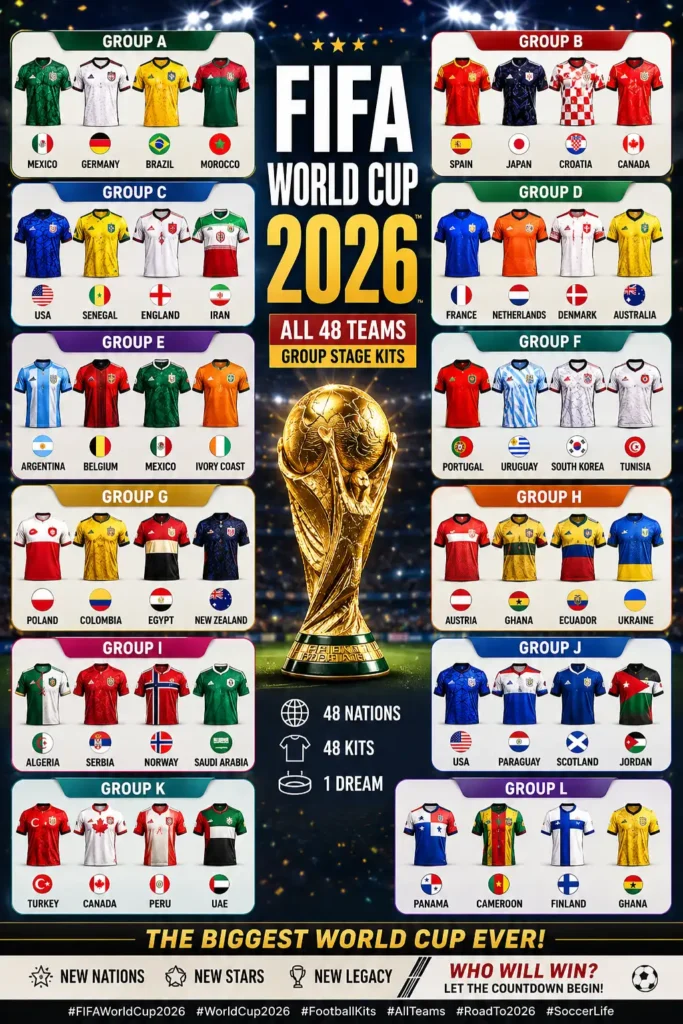
With 48 qualified nations preparing for football’s biggest stage, brands like Adidas, Nike, Puma, Macron, and emerging manufacturers face enormous pressure to deliver kits that balance heritage with modern football aesthetics.
This is a deeper football-style analysis of how every major World Cup nation could shape its visual identity heading into 2026.
THE TEAMS MOST LIKELY TO DOMINATE KIT SALES
Argentina
Argentina enters the tournament with unmatched emotional momentum. Their shirts are no longer just iconic football kits — they represent a generation led by legacy, passion, and global admiration.
Expect Adidas to avoid excessive experimentation. Slim black detailing, elegant gold champion elements, and cleaner stripe spacing would suit Argentina perfectly.
The smartest move would be combining modern athletic construction with subtle references to historic World Cup victories.
Brazil
Brazil jerseys always carry the weight of football history.
Every design choice matters because supporters expect creativity without damaging tradition. The classic yellow base remains untouchable, but retro green collars, vintage sleeve patterns, and street-football inspiration could define Brazil’s strongest World Cup collection in years.
Brazil’s away kits may once again become global fashion pieces outside football culture.
France
France has quietly become football’s luxury brand.
Their recent national team aesthetics feel premium, fashionable, and internationally marketable. Dark navy foundations with metallic gold detailing would perfectly reflect modern French football identity.
Nike understands that France shirts must feel elegant rather than loud.
Mexico
Mexico consistently produces emotionally powerful World Cup kits.
The federation’s visual identity is strongest when traditional culture becomes part of the design language. Aztec-inspired graphics, darker green shades, and vintage-inspired crests could make Mexico one of the tournament’s top-selling collections.
Their jerseys always feel connected to supporters rather than manufactured for trends.
Japan
Japan rarely misses when it comes to football aesthetics.
Their kits usually combine technical precision with artistic storytelling. Blue remains the core identity, but expect futuristic textures, subtle wave-inspired patterns, and extremely refined detailing.
Japan understands modern football fashion better than most countries.
THE NATIONS WITH THE STRONGEST FOOTBALL IDENTITY
Croatia
Very few national teams possess a visual identity as recognizable as Croatia.
The checkerboard pattern instantly separates them from every other country in world football. The challenge for designers is evolution without damaging tradition.
The best approach would be cleaner red-and-white blocks with sharper modern spacing.
Nigeria
Nigeria changed football kit culture forever in 2018.
Since then, every World Cup release carries huge expectations. Nigerian kits succeed when they embrace boldness fearlessly.
Supporters expect creativity, movement, energy, and African-inspired storytelling.
Anything overly safe would disappoint fans.
Netherlands
The Dutch identity remains beautifully simple.
Orange dominates football screens immediately, meaning designers do not need complicated graphics. Subtle retro influences from the Total Football era could elevate their 2026 collection.
Minimalism works best when the color itself already carries authority.
Morocco
Morocco’s rise after their historic international performances transformed the nation into one of football’s most respected modern brands.
Their kits now carry emotional value beyond North Africa.
Red-and-green combinations with cleaner tailoring and stronger crest detailing could help Morocco create one of their best World Cup looks ever.
England
England shirts perform best when simplicity leads the design.
Supporters rarely embrace aggressive experiments. Clean white foundations, traditional navy accents, and subtle retro references remain the safest and smartest direction.
The emotional connection to classic England kits is too powerful to ignore.
DARK HORSES FOR THE BEST KIT COLLECTIONS
Portugal
Portugal has the opportunity to create one of the most stylish collections of the tournament.
Deep red tones combined with black detailing and luxurious gold elements would perfectly reflect the elegance of modern Portuguese football.
Minimalism with confidence should be the target.
South Korea
South Korea’s football identity feels aggressive, modern, and fearless.
Their jerseys are strongest when bold visual energy matches the intensity of the team itself. Dynamic graphics, sharp typography, and darker red contrasts could elevate their overall presentation.
Senegal
Senegal consistently brings athletic energy and cultural pride into football aesthetics.
Green-and-yellow detailing combined with stronger fabric textures could give them one of Africa’s standout jersey collections.
Norway
Norway’s global relevance continues rising because of its new generation.
That means their jerseys now matter commercially in ways they never did before. Deep crimson tones with Scandinavian minimalism could make Norway one of the sleeper hits of the tournament.
Colombia
Colombia shirts naturally stand out because of their vibrant color palette.
The smartest direction would be balancing bold yellow with darker navy accents and cleaner modern sleeve construction.
Their kits should feel energetic without becoming visually overloaded.
THE COUNTRIES THAT SHOULD STAY TRADITIONAL
Germany
Germany performs best visually when they avoid unnecessary creativity.
White bases, sharp black accents, and disciplined structure represent German football properly.
Fans usually reject kits that drift too far away from traditional identity.
Uruguay
Uruguay’s sky-blue shirts already possess timeless elegance.
There is no reason for major redesigns. Clean construction and better athletic tailoring would be enough.
Peru
Peru owns one of football’s purest jersey templates.
The diagonal sash is already iconic globally. Simplicity is the strength.
Denmark
Denmark’s strongest football aesthetics come through understatement.
Monochrome red tones with subtle pattern work fit their national identity far better than flashy experiments.
Iran
Iran traditionally embraces disciplined football presentation.
Their kits should remain clean, minimal, and respectful of national colors without excessive distractions.
NEWCOMERS THAT COULD SURPRISE FANS
Uzbekistan
Uzbekistan reaching the World Cup represents a historic football moment.
This is a rare opportunity for the federation to create a shirt remembered forever by supporters.
Bold royal blue combined with national-inspired detailing could become one of the most appreciated debut kits of the tournament.
Curaçao
Curaçao has enormous untapped football branding potential.
Caribbean-inspired artistic elements, brighter color balance, and fearless creativity could instantly make their jerseys fan favorites.
Jordan
Jordan’s qualification carries emotional significance across Middle Eastern football.
A clean white-and-red design with stronger cultural symbolism could elevate their international identity dramatically.
Haiti
Haiti’s return would bring passion and emotion to the tournament.
Their football identity deserves energetic blue-and-red visuals connected to Caribbean culture and resilience.
BEST POSSIBLE RETRO-INSPIRED DIRECTIONS
Several nations are likely to revisit classic football eras because retro football fashion continues dominating modern supporter culture.
Nations most likely to benefit from retro influence:
- Brazil
- Netherlands
- England
- Germany
- Argentina
- France
- Mexico
- Portugal
Modern supporters increasingly prefer timeless football aesthetics over futuristic overdesigned graphics.
Vintage collars, simplified crests, cleaner sleeve trims, and classic typography may dominate the strongest collections of the tournament.
FOOTBALL FASHION WILL MATTER MORE THAN EVER
The 2026 FIFA World Cup arrives during a completely different era of football culture.
Fans no longer purchase jerseys only to support teams.
They wear them in street fashion, travel culture, music scenes, lifestyle photography, and social media branding. Football shirts have become global fashion pieces.
That reality changes how manufacturers design kits.
Performance still matters, but emotional storytelling now matters equally.
FINAL VERDICT
The best World Cup kits are never the loudest.
The strongest football jerseys succeed because they feel authentic to the nation wearing them.
Argentina represents history. Brazil represents joy. Germany represents discipline. Nigeria represents creativity. Japan represents precision. Mexico represents culture. England represents heritage.
The 2026 FIFA World Cup will showcase far more than football talent.
It will become a worldwide competition of identity, tradition, fashion, and national storytelling through jersey design.