
The FIFA World Cup 2026 will be played across 16 world-class stadiums located in the United States, Canada, and Mexico. These venues are more than just football grounds—they are massive entertainment complexes designed to host millions of supporters during the largest FIFA World Cup in history. From the iconic Estadio Azteca in Mexico City to the technologically advanced SoFi Stadium in Los Angeles and the tournament-final venue MetLife Stadium in New Jersey, every stadium has been selected to meet FIFA’s highest standards for safety, broadcasting, fan experience, sustainability, and match operations. The tournament will feature 48 national teams and 104 matches, making stadium infrastructure one of the most important factors behind the success of FIFA World Cup 2026.
As a football analyst who has followed FIFA World Cups, international tournaments, and stadium development trends for decades, I have reviewed the official venue data, host city plans, and stadium specifications to create this complete guide. This article covers seating capacity, venue technology, attendance potential, stadium architecture, lighting systems, and key facts that fans, journalists, travelers, and football enthusiasts should know before the tournament begins.
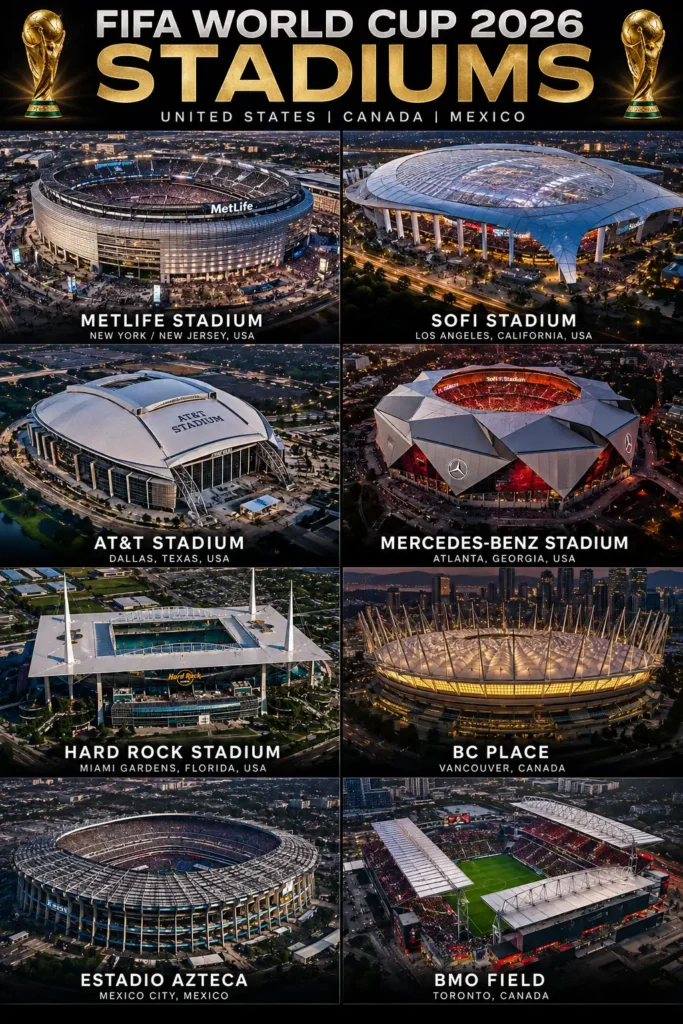
FIFA World Cup 2026 Stadiums at a Glance
The 2026 tournament will use 16 host stadiums across three countries. The United States hosts 11 venues, Mexico hosts 3 venues, and Canada hosts 2 venues.
| Stadium | Host City | Country | Capacity |
|---|---|---|---|
| Dallas Stadium (AT&T Stadium) | Arlington, Texas | USA | 94,000 |
| Mexico City Stadium (Estadio Azteca) | Mexico City | Mexico | 83,000 |
| New York New Jersey Stadium (MetLife Stadium) | East Rutherford | USA | 82,500 |
| Atlanta Stadium (Mercedes-Benz Stadium) | Atlanta | USA | 75,000 |
| Kansas City Stadium (Arrowhead Stadium) | Kansas City | USA | 73,000 |
| Houston Stadium (NRG Stadium) | Houston | USA | 72,000 |
| San Francisco Bay Area Stadium (Levi’s Stadium) | Santa Clara | USA | 71,000 |
| Los Angeles Stadium (SoFi Stadium) | Los Angeles | USA | 70,000 |
| Philadelphia Stadium (Lincoln Financial Field) | Philadelphia | USA | 69,000 |
| Seattle Stadium (Lumen Field) | Seattle | USA | 69,000 |
| Miami Stadium (Hard Rock Stadium) | Miami | USA | 65,000 |
| Boston Stadium (Gillette Stadium) | Foxborough | USA | 65,000 |
| Vancouver Stadium (BC Place) | Vancouver | Canada | 54,500 |
| Monterrey Stadium (Estadio BBVA) | Monterrey | Mexico | 53,500 |
| Toronto Stadium (BMO Field) | Toronto | Canada | 45,000 |
| Guadalajara Stadium (Estadio Akron) | Guadalajara | Mexico | 44,330 |
Which FIFA World Cup 2026 Stadium Is the Largest?
Dallas Stadium (AT&T Stadium) is the largest venue of the tournament with a capacity of approximately 94,000 spectators. The stadium is expected to host some of the biggest matches and is one of the most technologically advanced sporting venues in the world.
The second-largest venue is Mexico City Stadium (Estadio Azteca), one of football’s most historic stadiums. It will become the first stadium in history to host matches in three different FIFA World Cups.
FIFA World Cup 2026 Stadium Technology Comparison
| Stadium | Roof Type | Approx. LED Floodlights | Main Video Screens | Climate Control |
|---|---|---|---|---|
| SoFi Stadium | Covered Canopy | 600+ | Infinity Screen | Yes |
| Mercedes-Benz Stadium | Retractable Roof | 500+ | Halo Video Board | Yes |
| AT&T Stadium | Retractable Roof | 500+ | Giant HD Board | Yes |
| NRG Stadium | Retractable Roof | 400+ | Multiple Screens | Yes |
| BC Place | Retractable Roof | 300+ | HD Screens | Yes |
| Estadio Azteca | Open Air | 300+ | Modernized Displays | No |
Lighting counts vary depending on tournament configuration and FIFA broadcasting requirements. Stadium operators regularly upgrade lighting systems before major international events.
Estimated Total Attendance Capacity
With capacities across all 16 venues exceeding one million seats combined, FIFA World Cup 2026 is projected to become the highest-attended World Cup ever staged. The tournament includes 104 matches, significantly more than previous editions.
| Metric | Figure |
|---|---|
| Host Countries | 3 |
| Host Cities | 16 |
| Stadiums | 16 |
| Teams | 48 |
| Matches | 104 |
| Combined Venue Capacity | 1 Million+ Seats |
| Expected Global Audience | Billions |
Stadium Safety and Fan Experience
FIFA requires all World Cup venues to meet strict standards covering:
- Stadium security
- Crowd management
- Emergency evacuation systems
- Broadcasting infrastructure
- Accessibility
- Sustainability
- Hospitality services
- Digital ticketing systems
These standards ensure a consistent experience across all host nations.
Most Iconic Stadiums to Watch
Estadio Azteca (Mexico City)
Arguably the most famous football stadium in North America, Estadio Azteca has hosted legendary FIFA World Cup moments and remains a symbol of football history. It will host the tournament opener in 2026.
MetLife Stadium (New York/New Jersey)
MetLife Stadium will host the FIFA World Cup 2026 Final. With a capacity exceeding 82,000 spectators, it is expected to become the center of world football on July 19, 2026.
SoFi Stadium (Los Angeles)
Known for its futuristic architecture and immersive fan technology, SoFi Stadium is among the most innovative sports venues ever built.
Expert Analysis
From a football infrastructure perspective, FIFA World Cup 2026 represents the most ambitious stadium project in tournament history. Never before has a World Cup been spread across three countries, 16 host cities, and more than one million available seats. The combination of historic venues such as Estadio Azteca and cutting-edge facilities like SoFi Stadium creates a unique balance between football heritage and modern entertainment.
For broadcasters, sponsors, and fans, stadium technology will be a major story throughout the tournament. Advanced LED systems, high-capacity connectivity, immersive video boards, and upgraded hospitality facilities are expected to redefine the World Cup viewing experience.
Conclusion
The FIFA World Cup 2026 stadium lineup is the strongest and most technologically advanced collection of venues ever assembled for a football tournament. Whether fans are traveling to Dallas, Los Angeles, Mexico City, Toronto, Vancouver, or New York, they will experience some of the finest sporting infrastructure in the world. With 48 teams, 104 matches, and 16 elite venues, FIFA World Cup 2026 is set to become the largest football event in history.
FAQ
How many stadiums will host FIFA World Cup 2026?
A total of 16 stadiums across the USA, Canada, and Mexico.
Which stadium will host the World Cup Final?
MetLife Stadium (New York/New Jersey Stadium).
Which is the largest stadium in FIFA World Cup 2026?
Dallas Stadium (AT&T Stadium) with approximately 94,000 seats.
Which stadium will host the opening match?
Mexico City Stadium (Estadio Azteca).
{ “@context”:”https://schema.org”, “@type”:”Article”, “headline”:”FIFA World Cup Stadiums 2026: Complete Guide to All 16 Venues”, “description”:”Complete guide to FIFA World Cup 2026 stadiums including capacities, attendance, technology, host cities and venue analysis.”, “author”:{ “@type”:”Person”, “name”:”Football Analyst” }, “publisher”:{ “@type”:”Organization”, “name”:”Your Website Name” }, “datePublished”:”2026-06-04″, “dateModified”:”2026-06-04″, “mainEntityOfPage”:{ “@type”:”WebPage” }, “about”:{ “@type”:”SportsEvent”, “name”:”FIFA World Cup 2026″ } }