The 2026 FIFA World Cup is preparing to deliver the biggest international football tournament ever created. For the first time in history, FIFA is expanding the competition from 32 to 48 national teams 12 Groups, opening the door for more countries, new rivalries, and unforgettable football stories.
Hosted across the United States, Mexico, and Canada, the tournament will transform North America into the center of world football. Fans are already waiting for official schedules, team jersey launches, stadium reveals, and the arrival of football’s next generation of superstars.
This new World Cup era combines legendary football nations with rising teams from Africa, Asia, North America, and Oceania, creating a tournament with greater global representation than ever before.
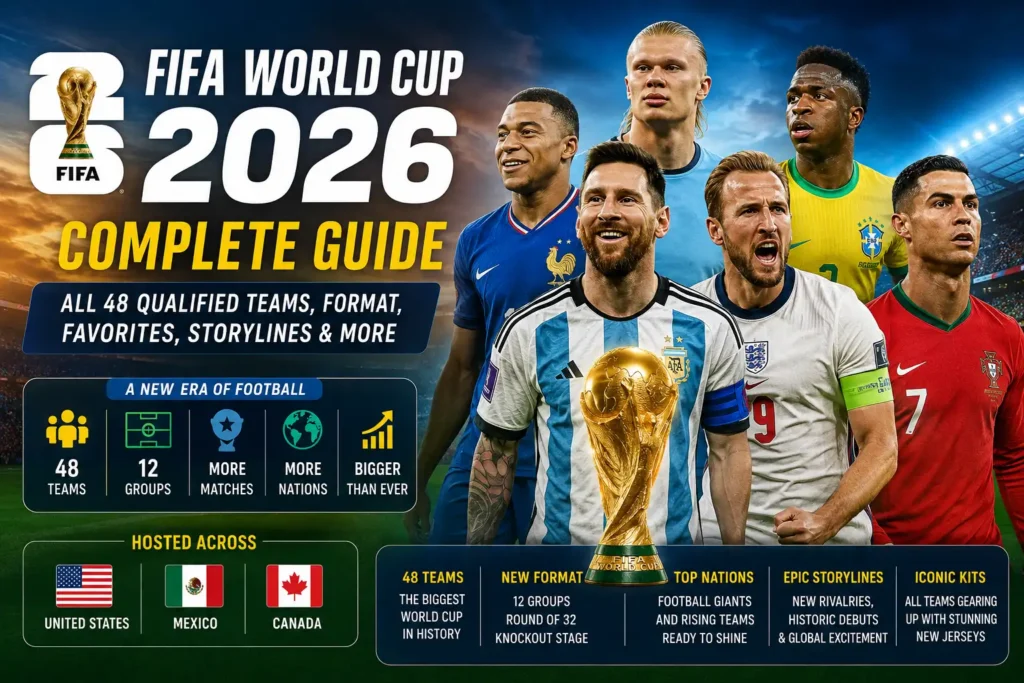
2026 FIFA World Cup Format Explained
The 2026 tournament introduces a completely redesigned structure aimed at increasing competition and global participation.
New Tournament Structure
- 48 national teams
- 12 groups with four teams each
- Top two teams from every group qualify automatically
- Eight best third-place teams also advance
- Expanded knockout stage beginning from the Round of 32
- More matches and larger squad demands than previous World Cups
The expanded format changes how teams approach group-stage football. Squad rotation, tactical flexibility, and physical conditioning will become even more important throughout the tournament.
The official FIFA World Cup 2026 schedule is expected to generate massive attention once match dates and host city fixtures are finalized.
Qualified Teams for FIFA World Cup 2026
North America (CONCACAF)
North American football enters the tournament with stronger infrastructure, improved youth development, and deeper national squads than previous generations.
Qualified Nations
- United States
- Mexico
- Canada
- Costa Rica
- Panama
- Honduras
- Haiti
- Curaçao
The United States continues building one of the youngest and most athletic squads in world football, while Mexico relies on tournament experience and technical midfield quality. Canada also arrives with growing confidence after rapid football development in recent years.
Several CONCACAF nations are expected to release bold and modern World Cup kits inspired by national identity and contemporary football fashion.
South America (CONMEBOL)
South America once again brings elite technical football, intense passion, and strong tournament history to the World Cup stage.
Qualified Nations
- Argentina
- Brazil
- Uruguay
- Colombia
- Ecuador
- Paraguay
- Chile
- Peru
- Venezuela
Argentina enters the competition as one of the strongest overall teams after building a highly organized tactical system. Brazil continues searching for another dominant generation capable of reclaiming global football supremacy.
Uruguay and Colombia also possess balanced squads with the discipline and attacking quality required for deep tournament runs.
South American World Cup jerseys are expected to become some of the tournament’s highest-selling football kits worldwide.
Europe (UEFA)
Europe remains the strongest football region in terms of tactical depth, elite coaching, and international-level player development.
Qualified Nations
- England
- France
- Germany
- Spain
- Portugal
- Netherlands
- Belgium
- Croatia
- Denmark
- Switzerland
- Sweden
- Norway
- Scotland
- Türkiye
- Czechia
- Bosnia and Herzegovina
France continues entering tournaments with exceptional squad depth and attacking quality, while Spain and Portugal focus heavily on technical possession-based systems built around younger generations.
England’s squad now carries significantly more tournament experience, and Germany continues rebuilding through modern tactical structure and athletic pressing systems.
European national team kits traditionally dominate football merchandise sales globally, and 2026 is expected to continue that trend.
Africa (CAF)
African football continues growing rapidly through stronger tactical organization, elite athleticism, and increased international experience.
Qualified Nations
- Morocco
- Senegal
- Nigeria
- Egypt
- Algeria
- Tunisia
- Ghana
- Cameroon
- Ivory Coast
- DR Congo
Morocco’s recent success proved African teams can compete consistently against elite football nations. Senegal and Nigeria also possess the speed, power, and attacking quality needed to challenge major tournament favorites.
Nigeria’s future World Cup jersey launch is already generating major anticipation among football fans because of the country’s iconic football fashion reputation.
Asia (AFC)
Asian football enters the 2026 World Cup with its strongest collective generation in history.
Qualified Nations
- Japan
- South Korea
- Iran
- Saudi Arabia
- Qatar
- Australia
- Uzbekistan
- Jordan
- Iraq
Japan continues leading the continent through tactical intelligence and technical quality, while South Korea remains one of Asia’s most dynamic attacking teams.
Uzbekistan and Jordan represent two of the tournament’s most exciting qualification stories, highlighting the rapid development of football across Asia.
Asian national team kits are also expected to feature some of the tournament’s most innovative football jersey designs.
Oceania (OFC)
Qualified Nation
- New Zealand
The expanded tournament structure significantly improves opportunities for Oceania teams. New Zealand now has a stronger pathway toward consistent World Cup participation and long-term football growth.
Top Favorites to Win the 2026 FIFA World Cup
Argentina
Argentina combines tactical balance, defensive discipline, and championship mentality. Even after the Messi generation, the national team remains one of football’s most organized and dangerous systems.
Their traditional sky-blue striped jersey continues ranking among football’s most iconic shirts.
France
France arguably possesses the deepest overall talent pool in world football. Their pace, physicality, and attacking depth make them one of the strongest title contenders entering the tournament.
France also continues producing some of the most stylish international football kits.
Brazil
Brazil enters the competition with pressure to restore long-term dominance at World Cup level.
Their attacking creativity remains among the best in football, while the legendary yellow Brazil jersey continues symbolizing the history of the sport itself.
England
England’s current generation now combines technical quality with greater composure and tactical maturity.
The national team’s modern football identity has transformed them into one of Europe’s most serious title challengers.
Portugal
Portugal’s midfield quality and attacking flexibility make them extremely dangerous in knockout football.
The national team is also expected to unveil premium World Cup kits inspired by modern European football aesthetics.
Morocco
Morocco is no longer viewed as a surprise team. Their defensive structure, transition football, and tactical discipline make them difficult opponents for any nation in the tournament.
Their global popularity has increased significantly following recent international success.
Biggest Storylines of the 2026 World Cup
First-Ever 48-Team Tournament
The expansion changes qualification opportunities, group-stage pressure, and overall tournament dynamics.
More countries now have realistic chances to compete on football’s biggest stage.
Historic Debut Nations
Countries such as Uzbekistan and Curaçao bring fresh football cultures and new fanbases into the global spotlight.
These teams could become major surprise stories during the tournament.
Massive North American Football Event
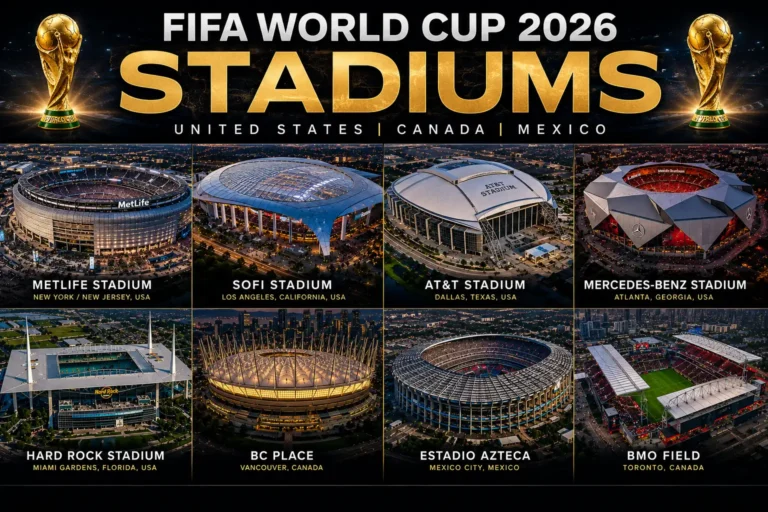
The United States, Mexico, and Canada will host matches inside some of the world’s largest modern stadiums, creating one of the biggest sporting events ever organized.
Attendance, global viewership, and media coverage are all expected to reach historic levels.
Official World Cup Kit Releases
National team jersey launches have become major football culture events before every World Cup.
Fans are already waiting for official 2026 kits from brands like Nike, Adidas, and Puma, with several retro-inspired football designs expected to trend globally.
Tactical Evolution of Modern Football
International football is becoming faster, more compact, and increasingly transition-focused.
Teams with elite midfield athleticism, defensive structure, and tactical flexibility may outperform traditional possession-heavy systems.
Final Thoughts
The FIFA World Cup 2026 represents a completely new chapter for international football. The expanded tournament brings more diversity, more competition, and greater global representation than any previous edition.
Traditional powers such as Argentina, Brazil, France, Germany, England, and Portugal still carry the pressure of expectation, but emerging football nations are now stronger and more organized than ever before.
With world-class stadiums, rising stars, modern tactical battles, iconic national team kits, and passionate global fanbases, the 2026 FIFA World Cup is shaping up to become one of the greatest tournaments football has ever seen.